Every business eventually faces periods when additional funding is needed to cover short-term cash flow gaps, complete projects, or secure opportunities. A recent global study revealed that the average days sales outstanding (DSO)—the time it takes to receive payment after a sale—rose by three days in 2023, reaching 59 days. Even more concerning, one in five companies is waiting over 90 days to receive payment for a typical invoice.
GAP financing, also known as bridge financing or interim financing, is designed to fill these financial voids, providing businesses with the flexibility and resources to meet their immediate needs while working towards long-term goals.
This blog explores GAP financing, how it works, its benefits, and how businesses can strategically use it to navigate financial challenges.
What Is GAP Financing?
GAP financing is a short-term funding solution that helps businesses cover temporary financial shortfalls. Whether it’s securing working capital, completing a project, or bridging the gap between two larger financing events, this flexible financing solution provides the necessary liquidity to keep operations running smoothly.
Key Features of GAP Financing:
- Short-Term Nature: Typically lasts from a few months to a year.
- Flexible Use: Funds can be used for various purposes, including operations, project completion, or acquisitions.
- Bridge Between Events: Designed to provide funding while waiting for longer-term financing or revenue generation.
How Does GAP Financing Work?
- Identifying the Need: A business determines the specific financial gap it needs to address, such as covering payroll, funding a project, or bridging real estate transactions.
- Application: The business applies for financing by presenting its financials, purpose for the funding, and repayment plan.
- Approval: The lender evaluates the business’s creditworthiness, assets, and repayment ability.
- Fund Disbursement: Once approved, the funds are disbursed quickly to address the immediate need.
- Repayment: the loan is repaid either through incoming revenue, proceeds from a larger financing event, or other designated sources.
Who Can Benefit from GAP Financing?
GAP financing is ideal for businesses that:
- Face short-term cash flow constraints.
- Need funding to complete ongoing projects or acquisitions.
- Are waiting for long-term financing or investment proceeds.
- Operate in industries with seasonal or cyclical revenue patterns.
- Have opportunities to secure high-value contracts or growth initiatives but lack immediate capital.
Benefits of GAP Financing
- Quick Access to Capital
- Funds are often disbursed rapidly, enabling businesses to address urgent financial needs without delays.
- Flexible Usage
- This financing option can be tailored to cover a variety of needs, from operational expenses to project funding.
- Preserves Business Momentum
- Ensures continuity in operations or projects, preventing disruptions due to cash flow shortages.
- Bridges Financial Timing Gaps
- Fills the void between funding events, such as awaiting a loan approval, investment, or customer payments.
- Supports Growth Opportunities
- Provides the liquidity needed to capitalize on time-sensitive opportunities, such as acquisitions or expansions.
Challenges of GAP Financing
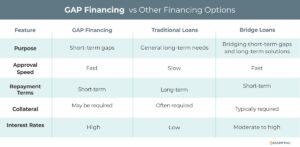
- Higher Interest Rates
- Short-term nature and flexibility often come with higher interest rates compared to traditional loans.
- Repayment Pressure
- Loans must be repaid within a short timeframe, which can strain cash flow if not carefully planned.
- Collateral Requirements
- Some lenders may require collateral, putting business assets at risk in case of default.
- Risk of Overleveraging
- Businesses must ensure they can manage the additional debt without compromising financial stability.
Industries That Use GAP Financing
- Real Estate Development
- Cover construction costs while waiting for permanent financing or property sales.
- Retail and E-Commerce
- Manage seasonal cash flow gaps or stock inventory ahead of peak seasons.
- Construction
- Fund project milestones or bridge payment delays from clients.
- Startups
- Support operations while awaiting venture capital or investor funding.
- Manufacturing
- Cover supply chain or production costs during order fulfillment delays.
Real-World Example: GAP Financing in Action
Scenario: A mid-sized construction company is building a commercial property but faces a cash flow gap as it awaits payment from a client. The company needs $500,000 to cover materials and labor costs to stay on schedule.
Solution: The company secures GAP financing to bridge the shortfall. The lender approves the loan based on the project’s progress and expected client payment.
Outcome: The project continues without delays, the client payment is received, and the loan is repaid. The company maintains its reputation and avoids financial disruption.
How to Use GAP Financing Strategically
- Assess the Need
- Clearly define the purpose and amount of funding required to address the gap.
- Plan Repayments
- Align repayment schedules with expected cash inflows to avoid strain on operations.
- Monitor Cash Flow
- Regularly review finances to ensure the loan is used effectively and repayment is on track.
- Choose the Right Provider
- Work with lenders experienced in GAP financing who offer transparent terms.
- Combine with Long-Term Planning
- Use this financing option as a bridge to a sustainable long-term financial solution.
Tips for Choosing a GAP Financing Provider
- Speed of Funding
- Select a provider known for quick approvals and disbursements.
- Cost Transparency
- Review interest rates, fees, and repayment terms to understand the total cost.
- Flexibility
- Ensure the provider offers terms that align with your business’s unique needs.
- Industry Expertise
- Partner with lenders experienced in your industry to ensure they understand your challenges.
- Reputation
- Research the provider’s track record and client reviews to ensure reliability.
Conclusion
GAP financing is a powerful tool for businesses needing short-term funding to navigate financial challenges or seize opportunities. This flexible financing option helps businesses maintain operations, complete projects, and achieve growth without long-term financial commitments by bridging the gap between funding events.
GAP financing could be the ideal solution if your business is facing a temporary cash flow gap or needs funding for an immediate opportunity. Evaluate your needs, choose a trusted provider, and leverage this financing option to keep your business on track and thriving.
Contact us to consult our experienced financial specialists to help strengthen your company’s financial structure and fuel growth opportunities.
Key Takeaways
- Every business eventually faces periods when additional funding is needed to cover short-term cash flow gaps, complete projects, or secure opportunities.
- GAP financing is a short-term funding solution that helps businesses cover temporary financial shortfalls, providing the necessary liquidity to keep operations running smoothly.
- This flexible financing option helps businesses maintain operations, complete projects, and achieve growth without long-term financial commitments.
ABOUT eCapital
At eCapital, we accelerate business growth by delivering fast, flexible access to capital through cutting-edge technology and deep industry insight.
Across North America and the U.K., we’ve redefined how small and medium-sized businesses access funding—eliminating friction, speeding approvals, and empowering clients with access to the capital they need to move forward. With the capacity to fund facilities from $5 million to $250 million, we support a wide range of business needs at every stage.
With a powerful blend of innovation, scalability, and personalized service, we’re not just a funding provider, we’re a strategic partner built for what’s next.