TL;DR
Food and beverage companies often have cash tied up in inventory long before products generate revenue. Inventory financing for food and beverage companies can use eligible ingredients, packaging, work in progress, or finished goods as collateral to provide working capital, while factoring and purchase order financing address different stages of the cash conversion cycle.
Food and beverage businesses routinely spend money months before they collect revenue. Ingredients must be purchased, packaging ordered, production scheduled, and finished goods stored before distributors, retailers, restaurants, or consumers pay.
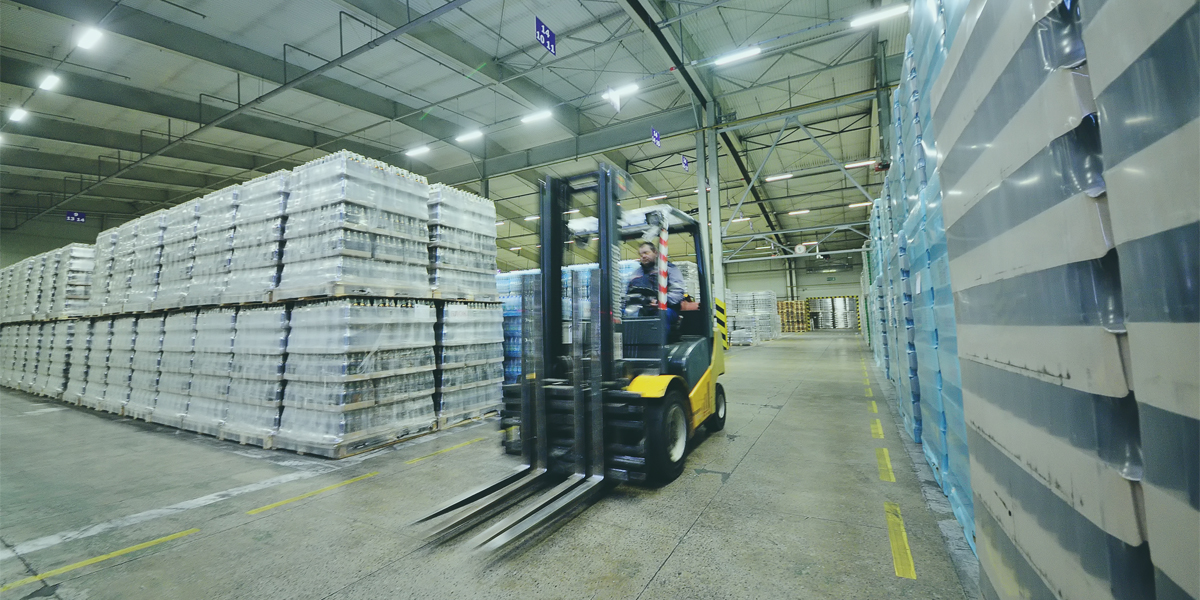
That operating cycle can leave a growing company short of cash even when demand is healthy. Money sitting in raw materials, cans, bottles, cartons, refrigerated products, and finished goods is not readily available for payroll, freight, marketing, or the next production run.
Food and beverage inventory financing can help convert part of that inventory value into usable liquidity without requiring the business to sell the products first.
Why food and beverage companies get cash stuck in inventory
Several industry pressures make the inventory problem especially difficult for food and beverage brands and manufacturers.
Seasonality is a major factor. A beverage company may build inventory before summer demand, while a specialty food producer may manufacture months ahead of a holiday season. The business must pay suppliers and production costs before the sales period begins.
Minimum production runs can create a similar strain. Co-packers and manufacturers may require a brand to produce more units than it can immediately sell. Packaging suppliers may also impose minimum order quantities for labels, containers, cartons, or closures.
Rising ingredient, packaging, labor, refrigeration, and transportation costs can increase the amount of cash required for every production cycle. At the same time, perishability creates additional risk. Products can lose value because of spoilage, expiration dates, damaged packaging, or changing consumer demand.
The result is cash tied up in inventory while the company still needs funds to operate and replenish stock.
What is inventory financing?
Inventory financing is a funding structure that uses eligible inventory as collateral. Depending on the facility, the collateral may include raw ingredients, packaging, work in progress, finished goods, or incoming inventory.
It is often part of asset-based lending. In an asset based lending food facility, a lender evaluates the company’s eligible assets and establishes borrowing availability based on agreed formulas, reporting requirements, and collateral controls.
Food inventory financing can provide working capital before products are sold. That makes it different from financing based only on revenue history or general business credit.
Inventory financing for food manufacturers may be particularly useful when the company has substantial stock but limited cash available to fund its next operating cycle.
How does inventory financing work?
The exact process depends on the lender and facility, but inventory financing generally follows several steps.
First, the lender reviews the company, its inventory, sales channels, financial performance, customer base, and operating cycle. It may assess the type of products held, where they are stored, how quickly they sell, and how easily they could be valued or liquidated.
Next, eligible inventory is identified. Not every item will necessarily qualify. Aging goods, highly perishable products, obsolete packaging, custom materials, or inventory with uncertain ownership may be excluded or discounted.
The lender then establishes borrowing availability based on the eligible collateral. The business may draw funds for working capital needs such as purchasing ingredients, paying production costs, covering freight, or supporting seasonal expansion.
As inventory is sold and the facility is repaid, borrowing capacity may become available again, subject to the agreement.
Who qualifies for food and beverage inventory financing?
Qualification depends on the lender, the company, and the quality of the inventory. Businesses are generally stronger candidates when they have reliable financial records, established sales, predictable inventory movement, and clear ownership of the goods.
Lenders may also consider:
- Inventory type, location, age, and shelf life
- Historical sales and inventory turnover
- Customer and supplier concentration
- Storage, tracking, and reporting systems
- Existing liens or financing arrangements
- Product demand and resale value
- The company’s overall liquidity and operating performance
CPG inventory financing may be available to established consumer brands, importers, distributors, and manufacturers, but inventory-heavy startups can be harder to finance when sales history is limited or product demand remains unproven.
How much does inventory financing cost?
Inventory financing costs vary according to the size and structure of the facility, the quality of the collateral, reporting requirements, company risk, and expected borrowing period.
Costs may include interest or financing charges, due diligence expenses, collateral monitoring fees, field examinations, appraisals, or other facility-related charges. Some structures may also include minimum usage requirements or unused-line fees.
A lower headline rate does not always mean a lower total cost. Businesses should review how borrowing availability is calculated, which inventory is eligible, how often reporting is required, and what fees apply throughout the facility.
The most useful comparison is the total cost of the capital relative to the cash-flow benefit it provides, such as avoiding production delays, maintaining stock availability, or supporting a high-demand season.
Inventory financing vs factoring
Inventory financing and invoice factoring address different points in the operating cycle.
Inventory financing uses goods that have not yet been sold as collateral. It can help a company pay for production, packaging, storage, or replenishment while products remain in inventory.
Invoice factoring applies after a sale has been completed and a customer has been invoiced. The business sells or assigns eligible unpaid invoices to a factoring provider in exchange for an advance.
Accounts receivable financing also uses outstanding receivables, although it may be structured as a revolving credit facility rather than the purchase of individual invoices.
A company with both substantial inventory and slow-paying customers may use a broader asset-based structure supported by inventory and receivables. The appropriate combination depends on the company’s assets, sales cycle, and funding needs.
When to use inventory financing, factoring, or PO financing
The right product depends on where cash is trapped.
Use inventory financing when the company already owns or is acquiring inventory and needs to free up working capital before the goods are sold.
Use invoice factoring or accounts receivable financing when products have been delivered and invoices are outstanding, but customers will not pay for 30, 60, or 90 days.
Use purchase order financing when the company has a specific customer order but lacks the cash to pay suppliers or manufacturers needed to fulfill it. Purchase order financing is tied to the order itself rather than to existing inventory or completed invoices.
These solutions can complement one another, but they should not be treated as interchangeable.
Put inventory to work instead of letting it drain cash
Excess inventory can quietly restrict growth. A business may have strong sales opportunities but lack the liquidity to buy ingredients, secure packaging, fund production, or keep essential products in stock.
eCapital’s inventory financing solutions are designed to help eligible food and beverage businesses use existing or incoming inventory to support working capital. Depending on the company’s needs, inventory financing may also be combined with receivables-based funding to support more of the cash conversion cycle.
Businesses evaluating working capital for food companies should consider where cash is currently trapped, how quickly inventory turns, and whether inventory financing, factoring, or purchase order financing best matches the underlying need.
Key Takeaways
- Food and beverage companies often commit cash to ingredients, packaging, production, and storage well before generating revenue.
- Inventory financing can use eligible inventory as collateral to provide working capital.
- Eligibility depends on inventory quality, shelf life, turnover, demand, reporting, and overall business performance.
- Factoring finances unpaid invoices, while purchase order financing supports fulfillment of a specific order.
- The right food and beverage financing solution should match the stage of the cash conversion cycle where liquidity is constrained.
ABOUT eCapital
At eCapital, we accelerate business growth by delivering fast, flexible access to capital through cutting-edge technology and deep industry insight.
Across North America and the U.K., we’ve redefined how small and medium-sized businesses access funding—eliminating friction, speeding approvals, and empowering clients with access to the capital they need to move forward. With the capacity to fund facilities from $5 million to $250 million, we support a wide range of business needs at every stage.
With a powerful blend of innovation, scalability, and personalized service, we’re not just a funding provider, we’re a strategic partner built for what’s next.