
TL;DR:
Dedicated freight provides recurring loads, more predictable revenue, and improved fleet utilization compared to spot-market freight, but it also introduces customer concentration risk, contractual obligations, and cash-flow challenges. Before committing capacity, carriers should carefully evaluate contract terms, payment timing, and profitability. When managed effectively alongside diversified freight sources and strong cash-flow planning, dedicated lanes can help create a more stable and scalable trucking operation
Both dedicated freight and spot freight can be effective business models, but each comes with its own opportunities and risks.
For many trucking businesses, consistent truck utilization is just as important as obtaining strong freight rates. While higher rates can improve revenue on individual loads, keeping trucks moving, minimizing deadhead miles, and maximizing productive equipment time often have an equally significant impact on overall profitability.
Dedicated freight offers a different operating model than relying on load boards or daily spot-market opportunities. While the promise of steady volume can improve planning and fleet utilization, dedicated arrangements also introduce commitments, customer concentration risk, and working-capital considerations that carriers need to understand before signing an agreement.
This article explores how dedicated freight works, how it compares to spot freight, and the operational and financial factors carriers should evaluate before committing capacity.
What Is Dedicated Freight?
Industry estimates suggest that approximately 80% of truckload freight moves under contractual arrangements rather than the spot market. Contract freight is any freight moved under a negotiated agreement between a shipper and carrier. The contract typically establishes pricing, service expectations, and freight commitments over a specified period.
Dedicated freight (often called dedicated trucking) is a specialized form of contract freight where the carrier commits dedicated capacity, equipment, drivers, or lanes to a specific customer or program. The arrangement often involves recurring routes, predictable volumes, and agreed-upon service expectations. Rather than securing loads one shipment at a time, the carrier typically commits equipment and capacity to support a shipper’s transportation needs on a continuing basis.
Although often used interchangeably, the terms “dedicated freight” and “dedicated trucking” are technically different:
- Dedicated freight refers to freight itself or the transportation arrangement.
- Dedicated trucking refers to the service model or operation used to move that freight.
For the purposes of this article, we’ll consider these two terms to be one and the same.
Dedicated trucking differs from other freight models:
- Spot-market freight: Loads are secured individually, usually through load boards, brokers, or direct requests.
- On-demand freight: Capacity is sourced as needed with little long-term commitment.
- LTL (Less-than-Truckload): Multiple shippers’ freight is consolidated into shared trailer space.
Dedicated trucking typically operates through dedicated lanes, recurring transportation routes between specific origins and destinations. These routes can range from a single recurring lane to a network of routes supporting a major manufacturer’s or retailer’s distribution requirements.
For carriers, the primary appeal of dedicated arrangements is predictability. For shippers, the primary benefit is reliable capacity.
How Do Dedicated Lanes Work?
Successfully managing dedicated lanes requires a disciplined approach. Careful coordination of drivers, equipment, schedules, and customer expectations is required to maintain reliable service and maximize utilization.
Typical Dedicated Lane Workflow
- A shipper forecasts transportation requirements.
- The carrier commits equipment and capacity.
- Loads are tendered on established lanes.
- Freight moves according to agreed schedules.
- Performance is measured through service metrics and delivery compliance.
- The arrangement is periodically reviewed and renewed.
Common Carrier Responsibilities
- Providing committed truck capacity
- Maintaining agreed service levels
- Meeting pickup and delivery windows
- Managing driver availability
- Supporting communication and shipment visibility
- Complying with shipper requirements and safety standards
Common Shipper Commitments
- Providing forecasted freight volumes
- Offering predictable lane opportunities
- Establishing pricing structures
- Defining service expectations
- Communicating operational changes
Dedicated agreements vary significantly, so carriers should review actual contract language rather than assume standard industry terms apply.
Dedicated vs. Spot Freight: How Do the Costs and Risks Differ?
Neither dedicated freight nor spot freight is universally better. Each model involves trade-offs between stability, flexibility, and risk.
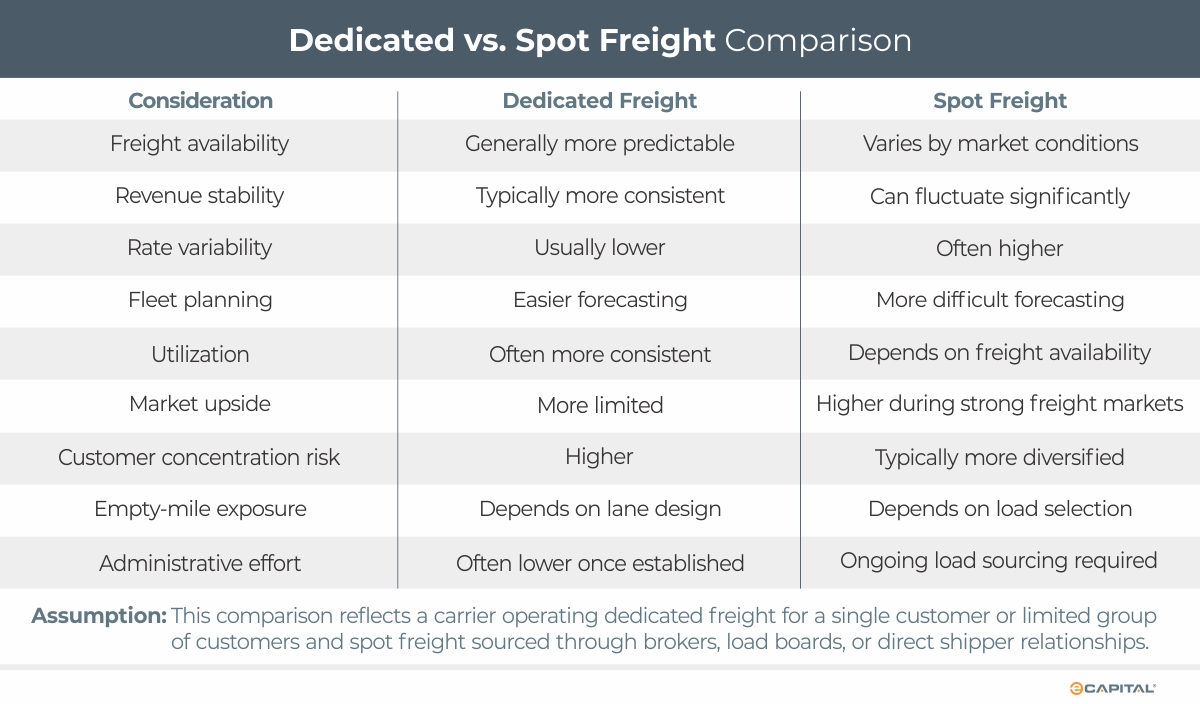
Carriers should evaluate both profitability and risk. A lane with slightly lower rates may still outperform higher-paying spot freight if it reduces deadhead miles, improves utilization, and keeps trucks moving consistently throughout the year.
How Can Owner-Operators and Small Fleets Access Dedicated Lanes?
Securing dedicated lanes generally requires demonstrating reliability, service quality, and operational consistency. It often involves ongoing prospecting, relationship building, and the ability to quickly capitalize on opportunities when competing carriers fail to meet customer expectations.
Common sources of dedicated trucking opportunities include:
- Direct relationships with shippers
- Regional manufacturers and distributors
- Retail distribution networks
- Third-party logistics providers (3PLs)
- Transportation procurement programs
- Contract freight opportunities with existing customers
Before pursuing dedicated trucking contracts, carriers should ask:
- Does the freight align with our equipment profile?
- Can we support the required service schedule?
- Are drivers available for recurring commitments?
- What percentage of fleet capacity will be allocated?
- Is the freight profitable after all operating costs?
What Should a Carrier Check Before Signing a Dedicated Contract?
Before committing to a signed agreement, carriers should take the time to conduct thorough due diligence. While dedicated trucking can provide predictable revenue, carriers should carefully review rates, volume commitments, payment terms, detention policies, and termination provisions to ensure the contract supports long-term profitability.
Before committing capacity under a dedicated contract, carriers should carefully evaluate the following terms and operational considerations:
Volume Commitments
- Is a minimum volume guaranteed?
- Are volume estimates enforceable or merely forecasts?
- What happens if freight volumes decline?
Empty Miles
- How many unpaid repositioning miles are required?
- Are return loads available?
- Is deadhead compensation included?
Detention and Accessorial Charges
These additional charges are compensation paid to carriers for delays and extra services outside normal freight transportation, helping offset costs that are not covered by the base freight rate.
Carriers should clearly understand:
- What detention terms apply?
- When does detention begin?
- Which extra services are compensated?
Payment Terms
- Net 15, Net 30, Net 45, or longer?
- Are invoice disputes common?
- How quickly are settlements processed?
Cancellation Provisions
- Can either party terminate without cause?
- What notice period applies?
- Is there compensation for sudden termination?
Counterparty Review
- Is the customer financially stable?
- How long has the business operated?
- Does it have a history of consistent freight volumes?
The answers to these questions can materially affect profitability even when advertised rates appear attractive. A dedicated contract may provide consistent loads and revenue, but the details of the agreement determine whether those loads are actually beneficial to the carrier.
How Do Dedicated Contracts Affect Cash Flow and Customer Concentration?
Maintaining healthy cash flow is critical in trucking, where operating expenses are incurred daily while customer payments may not arrive for weeks. Agile operations and effective cash flow management are essential to gain momentum as the market rebalances.
Dedicated freight often improves revenue predictability, but predictable revenue does not automatically translate into immediate cash flow.
Working Capital Example
Consider a carrier operating a dedicated lane generating:
- $40,000 in monthly revenue
- Net 45 payment terms
- Weekly fuel, payroll, insurance, and maintenance expenses
Although revenue appears stable, the carrier may wait 45 days or longer before receiving payment. During that period, operating expenses must still be paid.
A simplified timeline might look like this:
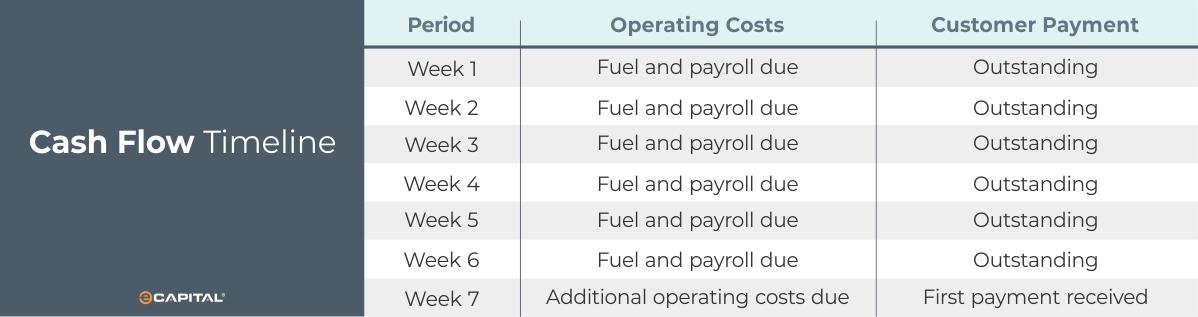
This is why dedicated freight frequently increases the importance of cash-flow forecasting and financial planning. Even profitable dedicated contracts can create working-capital pressure when payment cycles extend beyond operating cost cycles.
Predictability vs. Concentration Risk
Dedicated freight can improve predictability by creating recurring revenue streams. However, concentration risk increases when a significant percentage of revenue comes from a single customer.
For example:
- Customer A generates 15% of fleet revenue. This representing a manageable level of customer concentration and relatively low concentration risk.
- Customer B generates 70% of fleet revenue, creating significant customer concentration risk. If freight volumes decline, facilities close, or the contract is terminated, the carrier’s revenue could be affected immediately and substantially.
Strong carriers often balance dedicated freight with additional customers, lanes, or freight sources to avoid excessive dependence on any single account and to ensure smoother cash flow.
Even when dedicated trucking provides predictable revenue, managing cash flow remains critical. The timing of customer payments and operating expenses rarely aligns as fuel, payroll, insurance, and maintenance expenses often come due well before invoices are paid. For this reason, many carriers depend on external financing, such as freight factoring, to improve cash flow.
How Does Freight Factoring Improve Cash Flow?
Regardless of the business model you adopt, managing cash flow remains one of the most challenging aspects of running a successful trucking operation. The timing gap between completing a load and receiving payment is one of the most common reasons carriers seek financing solutions that improve access to working capital. Freight factoring converts receivables into working capital within hours by selling invoices to a finance provider rather than waiting for customer payment.
Instead of waiting through Net 30, Net 45, or longer payment cycles, carriers can access cash within hours after submitting approved invoices.
Potential benefits include:
- Faster access to working capital
- More predictable cash flow
- Improved ability to cover payroll and fuel expenses
- Reduced pressure from long customer payment cycles
- Greater flexibility to support fleet growth
For carriers operating dedicated freight, factoring can help align cash receipts more closely with ongoing operating expenses. This can be particularly valuable when dedicated contracts provide predictable revenue but extended payment terms delay access to cash.
It’s important to note that factoring addresses timing gaps between invoicing and payment. It does not eliminate customer concentration risk, guarantee profitability, or replace prudent financial management.
Conclusion
Dedicated freight can provide a powerful foundation for owner-operators and small fleets seeking more predictable operations, steadier asset utilization, and recurring revenue opportunities. However, dedicated contracts should be evaluated carefully. Volume expectations, payment terms, contract flexibility, empty-mile exposure, and customer concentration can significantly affect financial outcomes.
The most successful carriers view dedicated freight as part of a broader business strategy, balancing operational stability with diversification and disciplined cash-flow management. When combined with sound financial planning and appropriate working-capital solutions, dedicated lanes can help create a more resilient and scalable transportation business.
Contact us for a no-obligation consultation with an experienced transportation financing specialist to identify opportunities to accelerate cash flow, reduce funding gaps, and position your trucking business for sustainable growth.
Key Takeaways
- Neither dedicated freight nor spot freight is universally better. Each model involves trade-offs between stability, flexibility, and risk.
- For many trucking businesses, consistent truck utilization is just as important as obtaining strong freight rates.
- Dedicated freight is a specialized form of contract freight. For carriers, the primary appeal of dedicated arrangements is predictability. For shippers, the primary benefit is reliable capacity.
- Dedicated freight often improves revenue predictability, but predictable revenue does not automatically translate into immediate cash flow.
- Regardless of the business model you adopt, managing cash flow remains one of the most challenging aspects of running a successful trucking operation.
- Freight factoring converts receivables into working capital within hours by selling invoices to a finance provider rather than waiting for customer payment.
- When combined with disciplined operations, sound financial planning, and efficient working-capital solutions, dedicated lanes can help create a more resilient and scalable transportation business.
ABOUT eCapital
At eCapital, we accelerate business growth by delivering fast, flexible access to capital through cutting-edge technology and deep industry insight.
Across North America and the U.K., we’ve redefined how small and medium-sized businesses access funding—eliminating friction, speeding approvals, and empowering clients with access to the capital they need to move forward. With the capacity to fund facilities from $5 million to $250 million, we support a wide range of business needs at every stage.
With a powerful blend of innovation, scalability, and personalized service, we’re not just a funding provider, we’re a strategic partner built for what’s next.